
tag yourself: the comfort of self-diagnosis
jung's muse, the pleasure of self-categorization, personal coordinates

It’s a hot Monday afternoon in early June. My heartbroken friend has come over to check out my apartment. She’s going to stay there for a stretch of time while I’m out of town. We are sipping tea at my dining table. A dining table, where, only a few years prior, I weathered my own great heartbreak - time, what a dame - but that’s not the point of this post.
My friend is at a loss for how to understand her…self.
She wants to be free, a feather in the wind, but she feels she must contain and corral her wily side in favor of stability - preserving the love she cherishes so much. I know that plot point. My friend and I, in different timelines, plotted on the same emotional coordinate.
Same dining table, same issue, different women.
I wasn’t much one for math class, but there was something very satisfying about using a graphing calculator - entering a formula into it, an abstraction, and then seeing how that formula translated into a specific spot on the x/y axis.
Between sips and sobs, my friend (and this is why I love her) places her hand on the table, as if prepping me for some salacious gossip, and asks, “have you heard of Toni Wolff’s structural forms of the feminine psyche?”

“Tell me,” I beg.
She then breaks it down, plotting the x and y axis with her hands, sculpting the air and revealing a new framework that both of us can use to make sense of our chaotic inner worlds.
Toni Wolff was Carl Jung’s lifelong collaborator and “second wife” in psychoanalysis. She helped Jung develop the anima, animus, and persona, among other major Jungian concepts. She didn’t publish much on her own, but one essay, Structural Forms of the Feminine Psyche, solidified her contributions to Jungian psychology.
According to Wolff, there are four feminine psychological archetypes: the Mother, the Hetaira/Companion, the Amazon/Athena, and the Medial woman.
Mother: a woman “whose primary ego priority is the well-being of her children (or charges).” The Mother nurtures and loves stability.
Hetaira: a woman motivated by individual relationships and friendships. She is muse-like, less attached to traditional family ideals, and, at her unhealthiest, a kind of pick-me-girl.
Amazon: “a woman ultimately concerned with what she can bring to the world.” The world is her oyster and, if she Jo March(es) hard enough, she’ll buy all the oysters in the establishment.
Medial: a woman “whose primary focus is characterized by their basic preoccupation with phenomena related to the collective unconscious.” She is woo beyond woo, reiki certified, living off the land, and probably could tell you everything you need to know about your birth chart.
The Hetaira and Mother are personal/relationship-oriented opposites, while the Medial and Amazon are impersonal/collective-oriented opposites.
I’ve plotted four of the female characters from the Odyssey as an example here for ya. They don’t exactlyyyy match up but it gives you an idea:
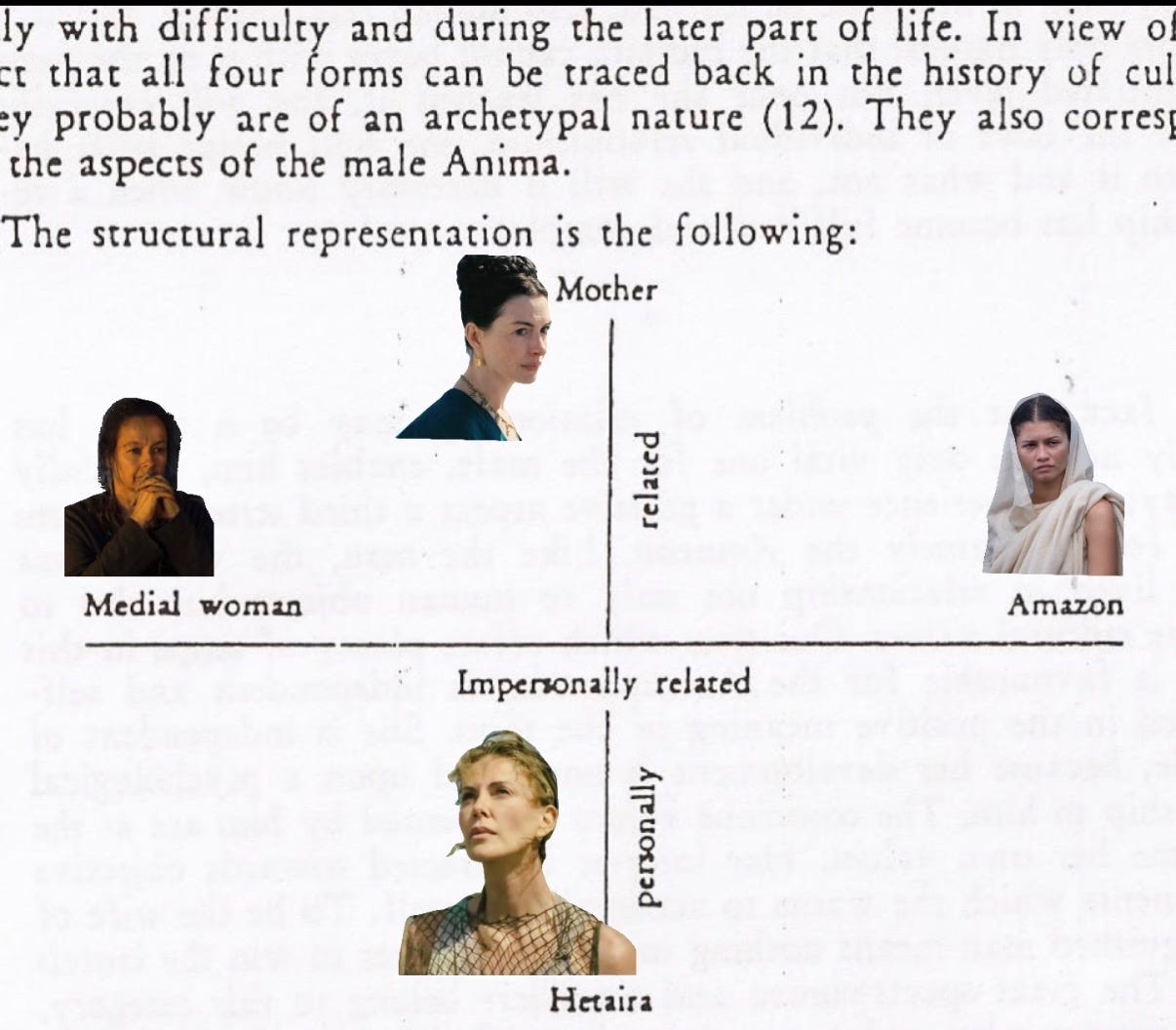
Wolff argued that as a woman individuates, she drifts further out onto one of these poles. She may land somewhere on a diagonal, ie, between Amazon and Hetaira, but can never fully be on the opposite side of a given pole. So, if you’re fully girlbossing (the Amazon), you can’t be fully in the spiritual world (the Medial). And if you’ve leaned far into motherhood and queenship, it will be harder and harder to consciously access the Hetaira/Muse archetype.
If you’re anything like me, this categorization makes you uncomfortable. After all, it’s 2026. I don’t want to choose. I want to be Everything Barbie™. When this essay was published in 1951, women had to choose. Wolff, believing herself to be the Hetaira, destroyed all personal correspondence between her and Jung when they “broke up.” I don’t know if I agree you can’t be both, or all, but it may be that different seasons of life call forth different sides of a woman - like an Eras Tour of the psyche.
But back to the dining table:
As my sweet friend explained this, I immediately self-categorized. I put myself on Toni’s little map. In fact, with any personality test or spectrum of identity, most people find it deeply comforting to “land” somewhere - even if we know we are not just one thing.
Humans love personality tests for the same reason I loved my TI-84 graphing calculator. We take the elements of an ever-changing personality and map it onto a neat little plot point. Answering a series of questions for Myers-Briggs (developed by a fellow Jungophile) or, idk, Pottermore, suddenly makes sense of idiosyncracies that feel so chaotic experientially. When I see that my patronus is a gray mare (tru) or that, because of my Kibbe body type I actually CaNnOT wear bandage dresses(!!! don’t make me!!!) I understand myself better.
Personality tests, and, I would argue, “tag yourself” memery, satisfy both ends of an individuality <——> tribalism continuum. By tagging yourself, you get to see where you uniquely land, but still have the reassurance that your “je ne sais quoi” is shared by others.
The moment my friend told me about Wolff’s four structural archetypes, the conversation itself moved to a different coordinate. We jumped from the dark and tangled swamp of personal heartbreak to a two-way symposium on what it is to be a woman, broadly speaking. Pun intended. Like the comfort of a correct diagnosis, Wolff’s structure won’t solve our frustrations, but it gives them a name and a shape. And if something has a name, it must not be new, and if it is not new, there must be a way to plot your course when navigating through it.
ENOUGH CHIT CHAT - SHOW ME SOME CHARTS
Because I love you, here are few charts I found for you to plot yourself on:
This first one is a bit of aesthetic categorization:
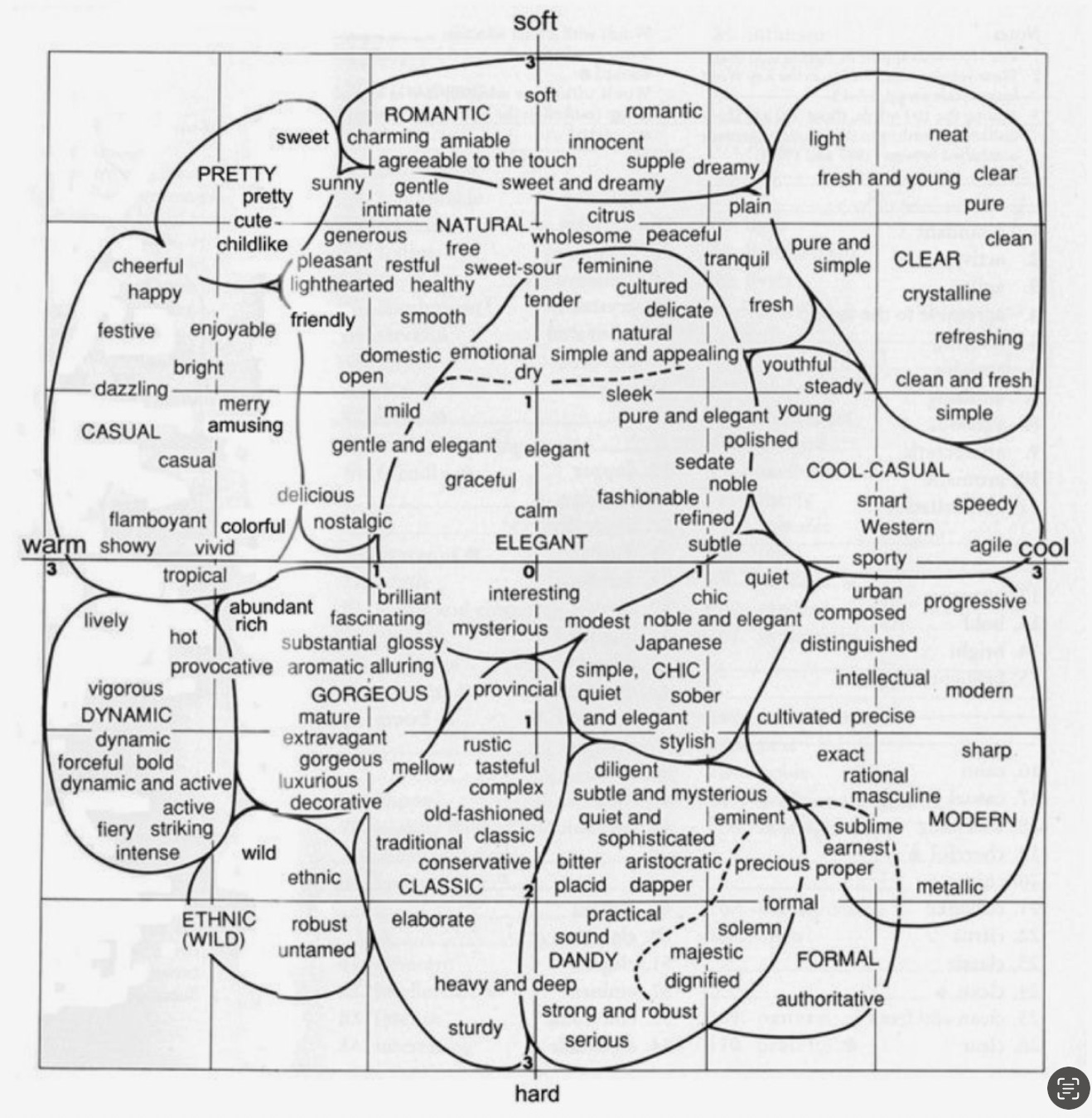
I like the x/y of cool-to-warm and soft-to-hard. As another friend of mine pointed out, some of the words on this style chart are totally unhinged but we all know someone who is ETHNIC (WILD) and she’s not gonna stop inviting you to come to Burning Man with her…
Okay now for something a little deep:
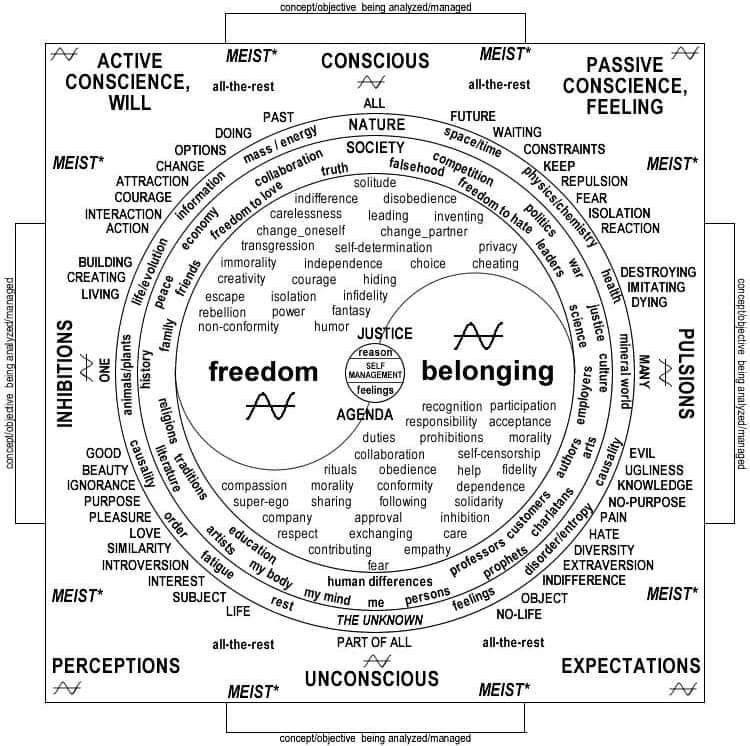
Interesting to see that both “approval” and “collaboration” fall into “belonging.” It demonstrates the good and bad parts of a word we usually associate with something just positive. “Nature,” “society” = conscious, but “me,” “human differences” = unconscious? Are artists and politicians diametrically opposed? Much to ponder.
Some classic tag yourselves for those of you feeling a little brain-rotty-otty:
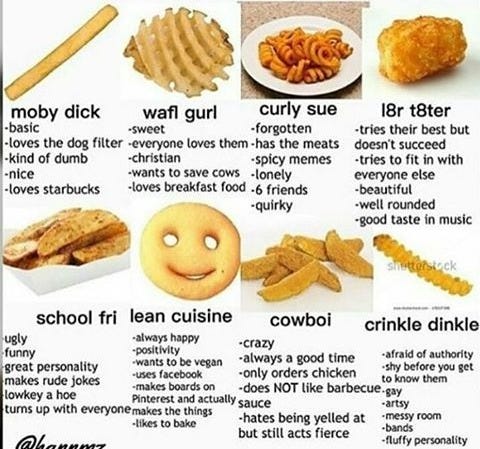
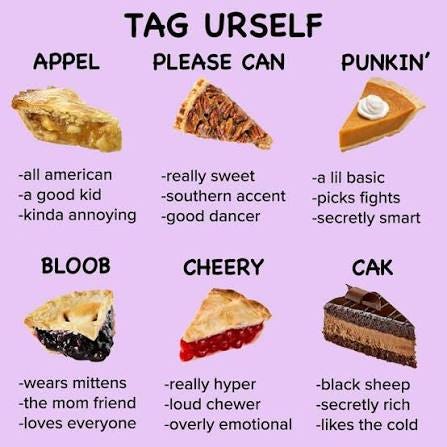
(Me? wafl/curly sue cusp, cheery pie)
Now for some scales:
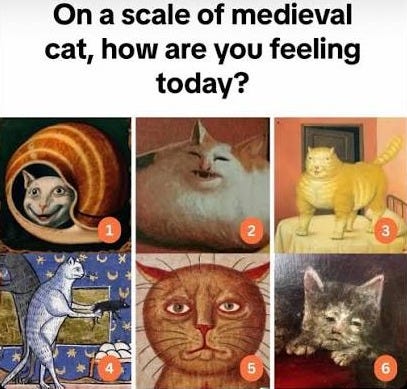
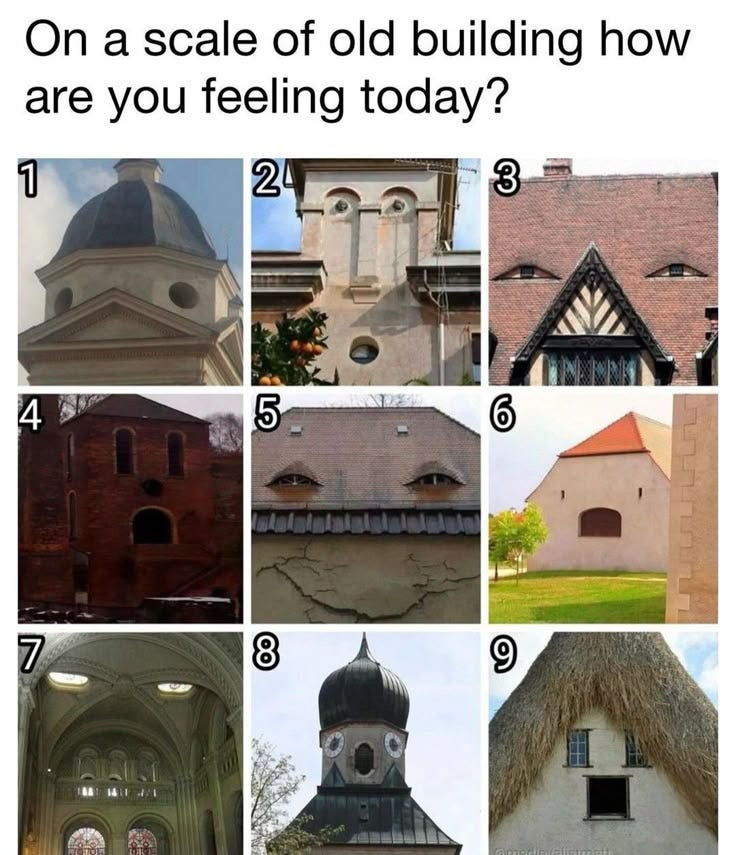
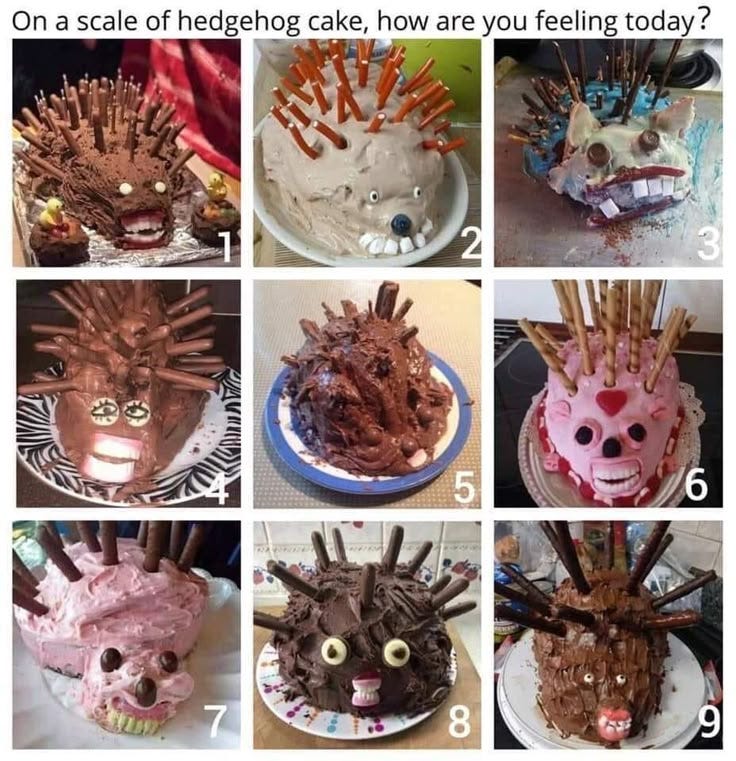
For those of you creating a show bible (there must be at least one). I like this because, while it applies to mythology, it also helps to see where the twists and turns of your little life are in the flow of an archetypical story:
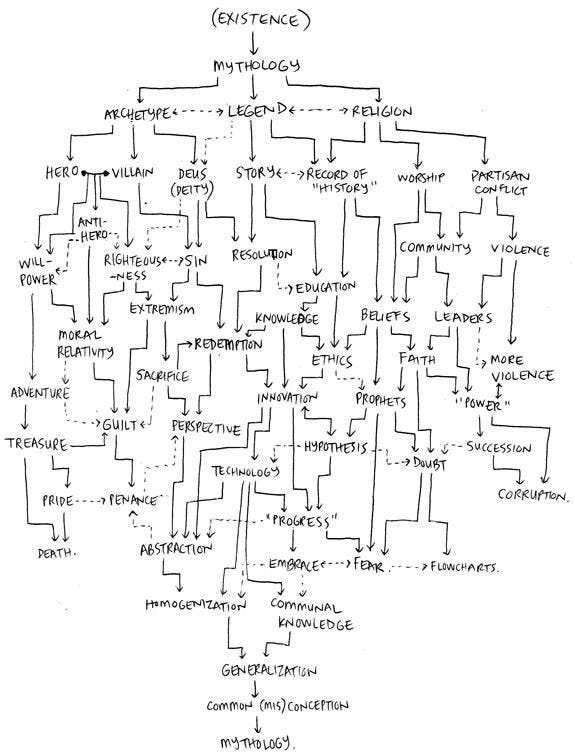
In your Villain era? Redemption may be on the way!
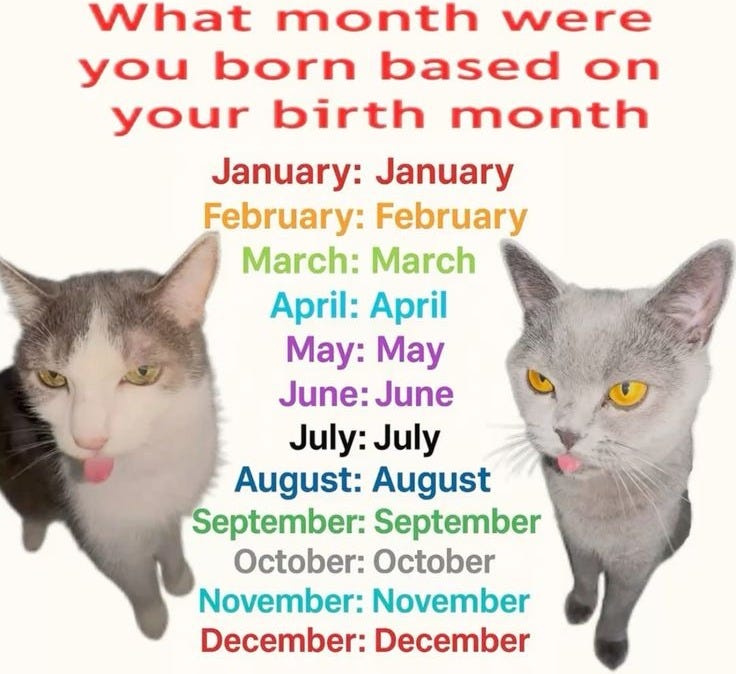
And finally, we cannot forget a-birth-month-to-flower/gem/pizza breakdown. I admit I hate it when my birth month/star sign gives me something I hate but maybe that’s my shadow speaking.
PERSONAL COORDINATES
Many of you recently subscribed because of some essays I’ve been posting to my Instagram. Thank you!!! I read the comments and you’ve given me the push I needed to write here more.
The impetus for both the video essays and this Substack began from a quiet plot point within myself: the need to not ONLY perform the work of other writers (acting,) but to write and express of my own volition.
When I act, I find great pleasure in conforming and discovering myself within another writer’s vision. When I write, I hunch over my keyboard like a feral warrior picking apart the raw flesh of a nutritious and bloody carcass. I eat my own heart and mind, steal from so many other great thinkers/believers, presenting to you a cornucopia of sustenance to chew on. I hope it nourishes your spirit and gives us the curiosity we need for just one more hunt. These two plot points (performer/creator) feel discrete at times. But the endless trek from one to the other has become a kind of dance. Mary Oliver put it best:
THREE THINGS TO REMEMBER
“As long as you’re dancing, you can
break the rules.
Sometimes breaking the rules is just
extending the rules.
Sometimes there are no rules.”
What plot points are you dancing between?
More soon,
E